From a Personal Project to an Entire AI‑Generated SaaS
I created a SaaS with vibe coding. Post #2572 in your timeline. But mine uses LLMs not just to be built — at its core, as an outsourced algorithm you never see.
It Started with a Prompt
Yeepl started as a personal experiment. After working with Peetchr on an AI-powered HR product, I was convinced of two things: using LLMs as an invisible algorithm — without the chatbot interaction — was possible. And that job hunting was fundamentally broken.
People on LinkedIn were sharing "miracle prompts" to analyze and improve CVs. So I tried them. The workflow was entirely manual: open Gemini, paste a prompt, copy the results, format them in Apple Pages, export to PDF. And that's without mentioning the job search itself — scrolling endlessly on LinkedIn, trying different keywords, reading description after description, wondering if each job was worth the time to tailor a CV.
"Not worth it" was the default answer.
After two months of using LLMs to tailor every application, the results were clear:
Nearly 1 out of 2 applications led to a first interview. The game had changed. Applying was no longer depressing — it was a system I had unlocked.
From Manual to Automation
But tailoring a CV — even with AI — is time-consuming and repetitive. So I decided to automate the entire flow: from sharing a LinkedIn job URL to receiving a generated PDF.
n8n quickly emerged as the right orchestration tool. It handled agents well, and there were templates for LinkedIn job fetching.
At this point, I should mention: I have no coding background. Gemini was my companion.
I gave it context, shared screenshots, explained the workflow goal — and it proposed specific n8n nodes or wrote JavaScript for code nodes.
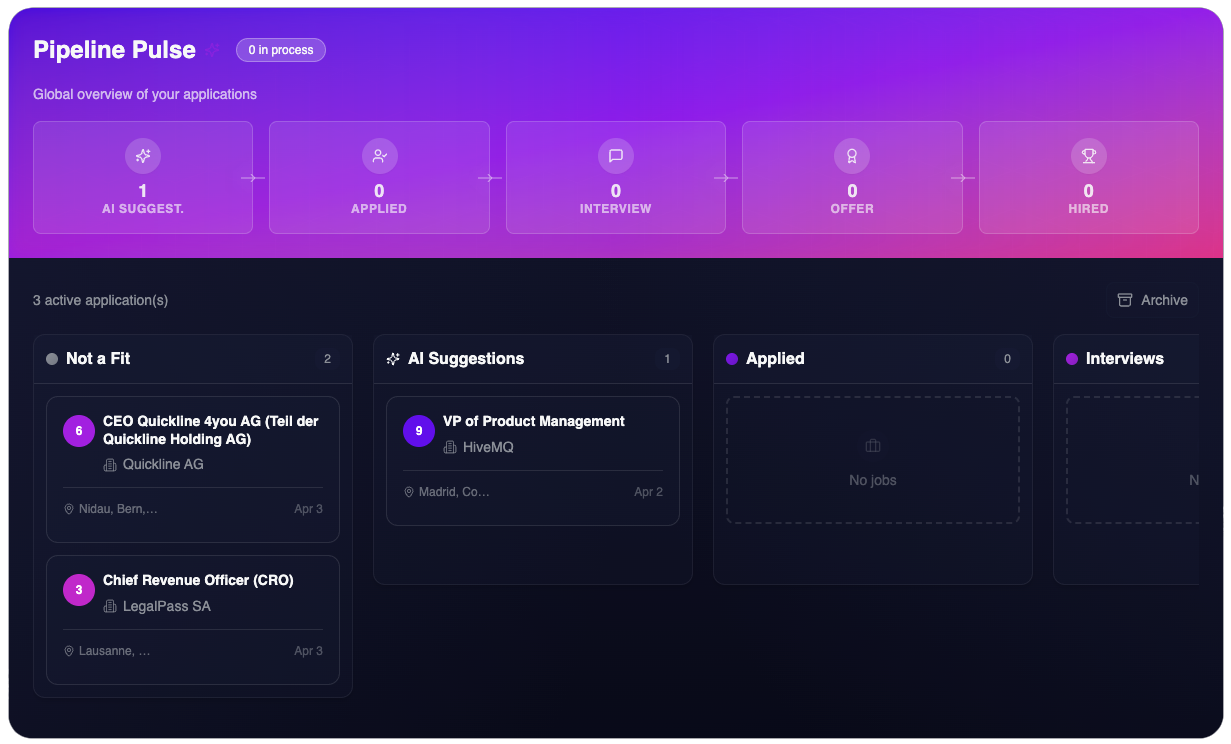
The first workflow used Google Sheets to store search criteria, a Gemini agent to analyze each job (fit score, research, CV modifications), and Google Docs/Drive for document generation. For the frontend, I connected everything to Notion. Every morning, I could review a dashboard of the last 24 hours' job offers — each with a fit score, my tailored CV in PDF and DOCX, and a direct link to apply.
Let's Try Figma Make: From 1 to 150 Prompts
This felt like the right moment to test Figma Make. Notion was perfect for a personal workflow, but could Figma Make build a real interface connected to an n8n backend?
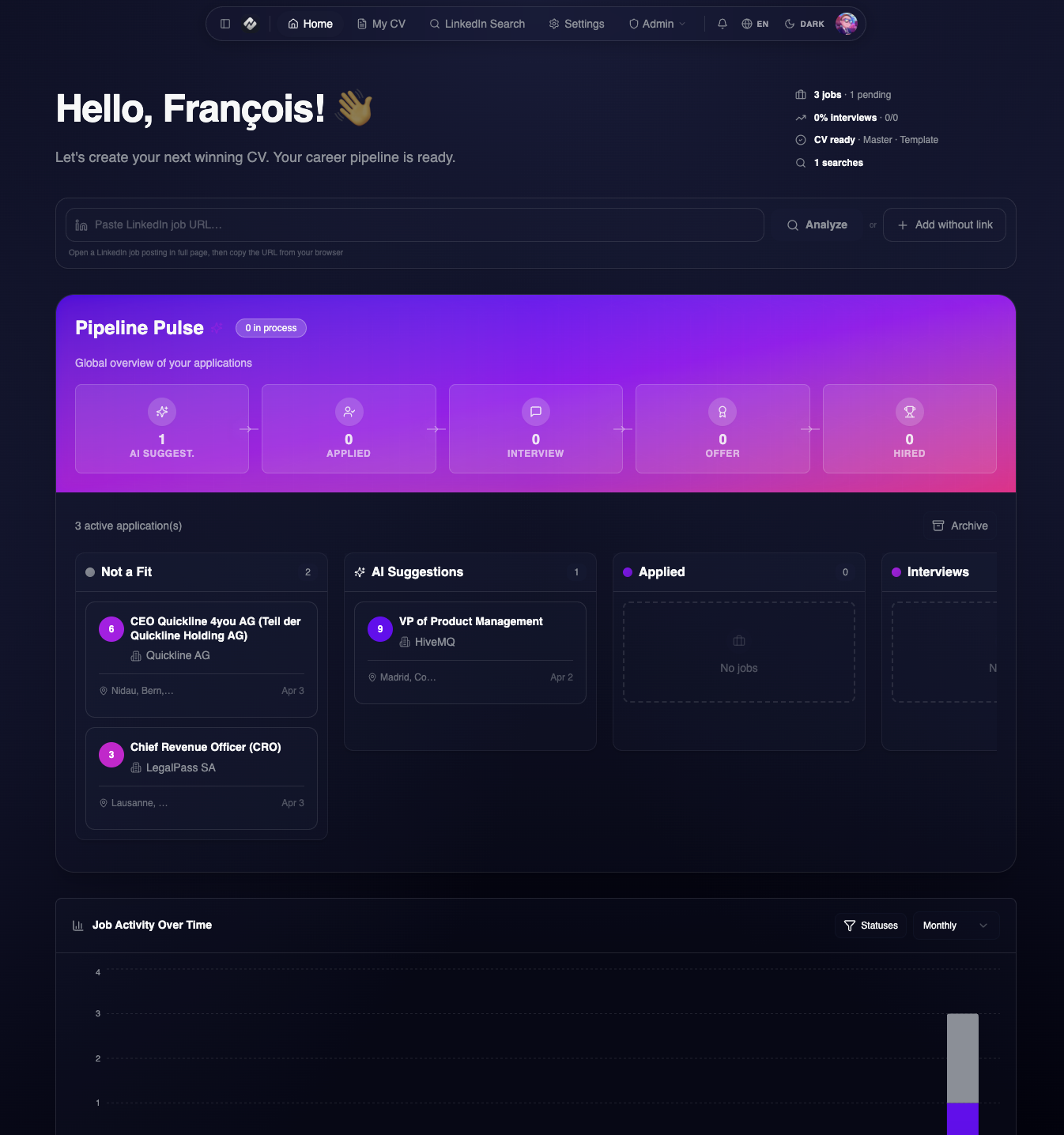
I started by choosing an off-the-shelf design system — no need for a custom one at this stage. Then I created three initial screens: homepage, job description upload, and the job tracking table.
I discovered that sharing screenshots with Figma Make was the best approach — it understood context and goals much better from visual references. After a few iterations, the results were impressive.
Building a SaaS
At some point, the question shifted: what if this could help others?
The value proposition was clear. As a job seeker, applying isn't the hard part. The hard part is spending hours every day searching, wondering if each company is worth your time, then investing effort in tailoring a CV that has an 85% chance of being screened out.
The real question every job seeker faces: is my time well invested today?
What started as a personal project had become a genuine solution: giving time back to job seekers, eliminating hours of manual searching, and keeping motivation alive.
I asked Figma Make: "What should I do to make this available publicly?" The answer was immediate: add user authentication, replace Google Sheets and Google Drive — they aren't built for scale or privacy.
Rebuilding with a Real Stack: From 150 to 500 Prompts
I asked Figma Make for a product roadmap. It analyzed my n8n workflow JSON exports, identified every flow, and generated a complete roadmap — with impact measurements, KPIs, and a phased timeline from "do today" to "when you reach 1,000 users."
The stack evolved to React + TypeScript, Vite, Tailwind CSS, Shadcn/UI for the frontend, Supabase for auth, database, storage, and edge functions, and n8n continued to orchestrate all AI workflows calling Google Gemini.
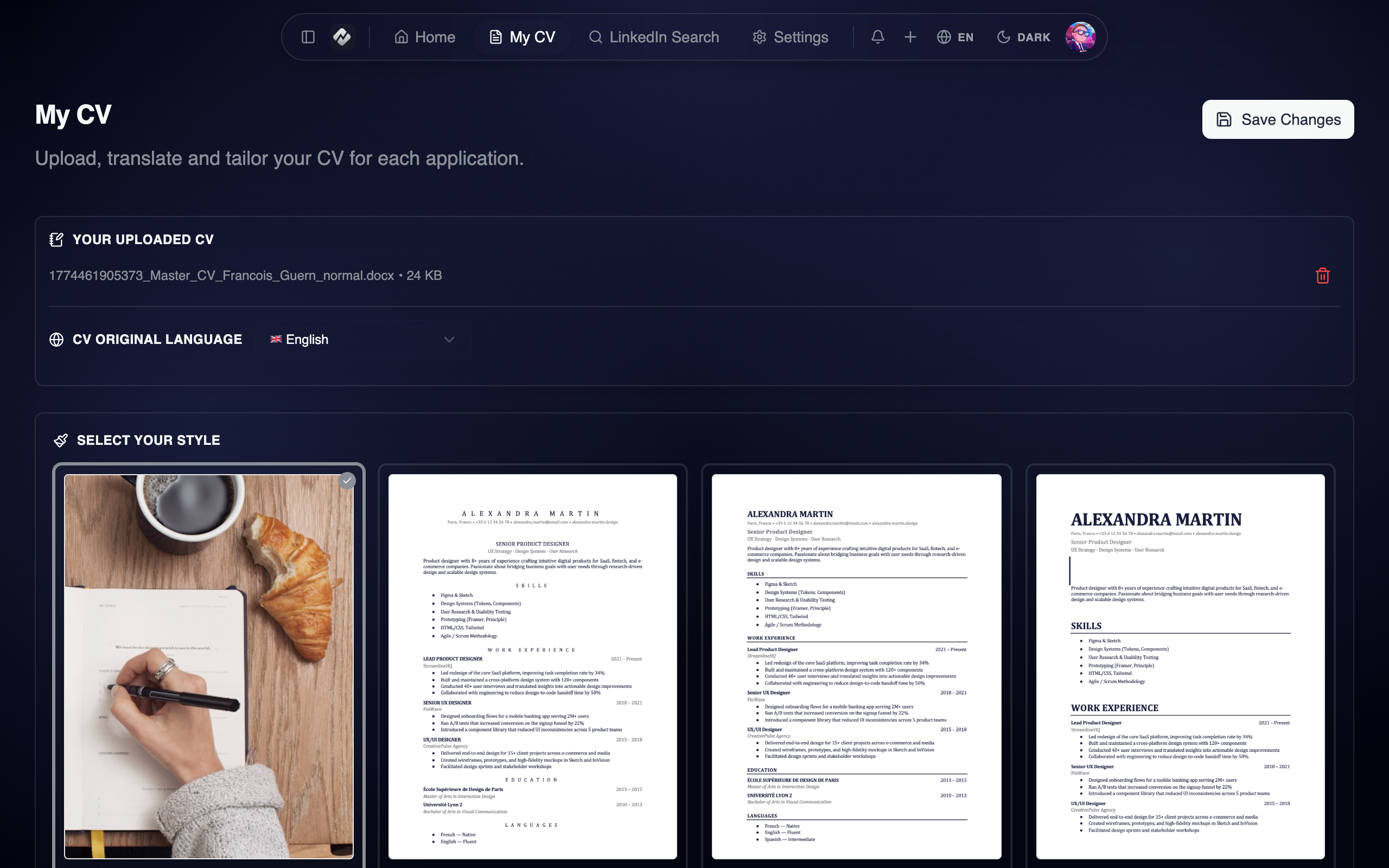
Around prompt 500, I had a working prototype — all pages connected to n8n, using Supabase as the backbone. But a prototype isn't a product. The remaining 1,000 prompts were about polish: onboarding flow, UX consistency, and a 5,000+ line CV editor handling DOCX template generation, AI-powered improvements, multi-language translations, and real-time preview.
Enter Claude Code: From SaaS to Product Engineering
After 2,500 prompts across Gemini and Figma Make, Yeepl had a solid foundation. But building features at production quality required a different kind of AI collaboration. That's when I started working with Claude Code (Anthropic's CLI agent).
The shift was dramatic. With Claude Code, I wasn't prompting for isolated code snippets — I was pair-programming with an agent that understood the entire codebase. It could read any file, trace data flows across components, and make surgical edits to a 188KB CV editor or a 6,000-line edge function.
What a typical session looked like
Language Detection Pipeline
Modified the n8n FitScore workflow, created a Supabase migration, updated the edge function, added a language chip to the job drawer — and deployed. All without me writing a line of code.
Per-job Language Tracking
Designed a per-job snapshot system: new database column, n8n workflow modifications, and frontend logic that reads the snapshot rather than the live preference.
Side-by-side CV Comparisons
Restructured the entire renderSectionCard function from a vertical stack to a side-by-side grid — preserving all editing, accept/reject, and AI reasoning functionality.
User Analytics Dashboard
Built a complete analytics system from scratch: edge function endpoint aggregating 4 tables, 8 KPI cards, trend charts, and a sortable per-user table. Built, deployed, and verified in under 30 minutes.
What I Learned: AI as an Industrial Product Process
Building Yeepl taught me that AI-assisted development isn't one tool — it's a pipeline, just like the product itself.
Validated that LLM-tailored CVs outperform generic ones (40% vs 14%)
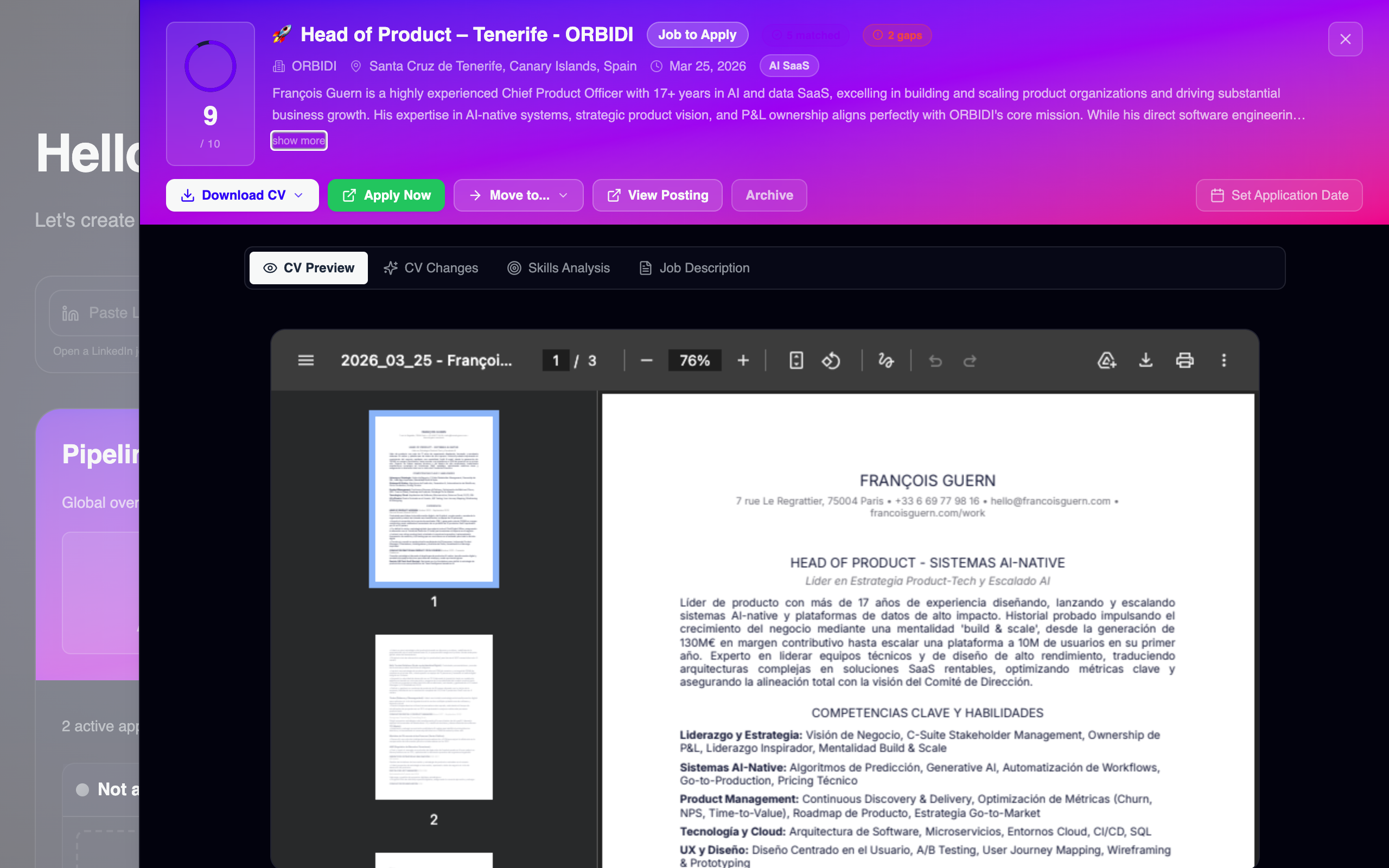
Orchestrated the full pipeline: job scraping, analysis, CV generation
Built and iterated on UI from design system to connected prototype
Full-stack feature development, refactoring, deployment at production quality
The key insight: each AI tool has a sweet spot. Gemini excels at creative ideation and workflow prototyping. Figma Make bridges design and code for rapid UI iteration. Claude Code operates at engineering depth — reading codebases, making precise multi-file edits, and verifying builds.
None of them replaced thinking. Every feature started with me defining the user problem. But they compressed the time between idea and implementation from days to hours.
The future of product building isn't about choosing between human and AI. It's about designing the right handoffs — knowing when to sketch on paper, when to prompt, and when to pair-program with an agent that can see your entire codebase.
Yeepl is the result of that process. And it's still just getting started.